Time made visible
Across this body of work, data is not treated as information to be decoded but as a material to be shaped.
The projects move away from screens, charts, and real-time dashboards, replacing them with processes of engraving, stacking, and accumulation. Representation becomes physical, and time becomes part of the output rather than a parameter behind it.
Visualization models are never neutral. Each way of measuring implies a way of seeing, and each way of seeing carries a bias. Instead of concealing this condition, the works amplify it by translating long-term variation into form. Change that would otherwise remain imperceptible is allowed to settle into matter.
Whatever Happened, Happened marks a transition from immediate interaction to slow inscription. Still situated in space and activated by presence, the project records audience movement as concentric rings engraved on wood. The piece evolves gradually over the duration of the exhibition, accumulating traces rather than producing instant feedback. What remains is not a representation of an event but the event itself, embedded in material as memory of a specific place and time.
Whatever happened, Happened
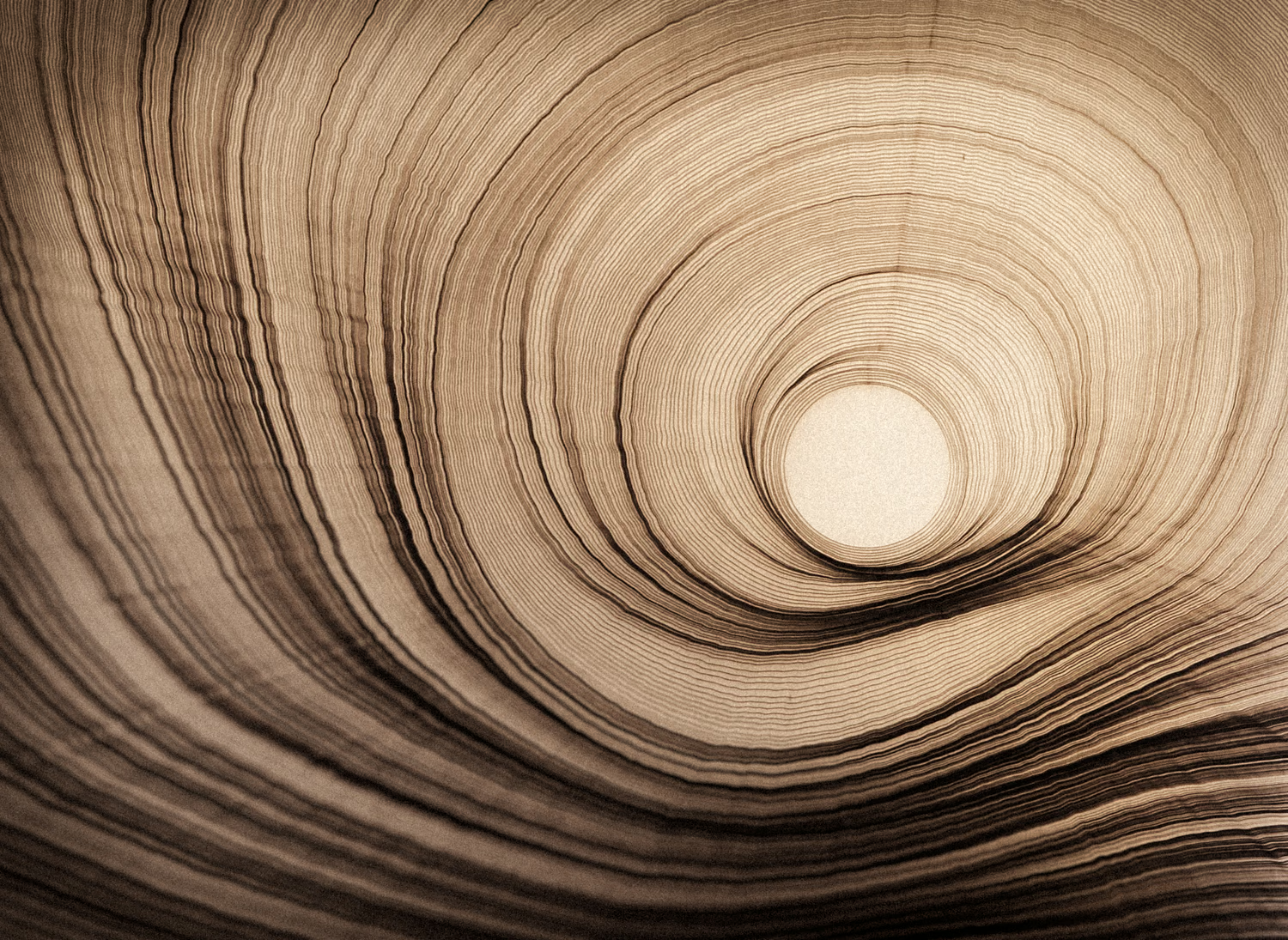
The resulting objects do not inform in the conventional sense. They do not explain or summarize. They sediment. Density, rhythm, and texture are encountered before any notion of measurement, shifting interpretation from analytical reading to embodied perception.
Receptive Environments moves further away from human interaction and toward systems that operate independently of observation. Environmental conditions such as temperature, humidity, and light drive computational growth processes that engrave a new botanical structure each day. The exhibition becomes a recording of the forces outside the gallery that are usually background noise. Instead of visualizing data as abstraction, the work confronts viewers with its physical consequences, placing the generated forms alongside the environments that produced them.
Receptive Environments
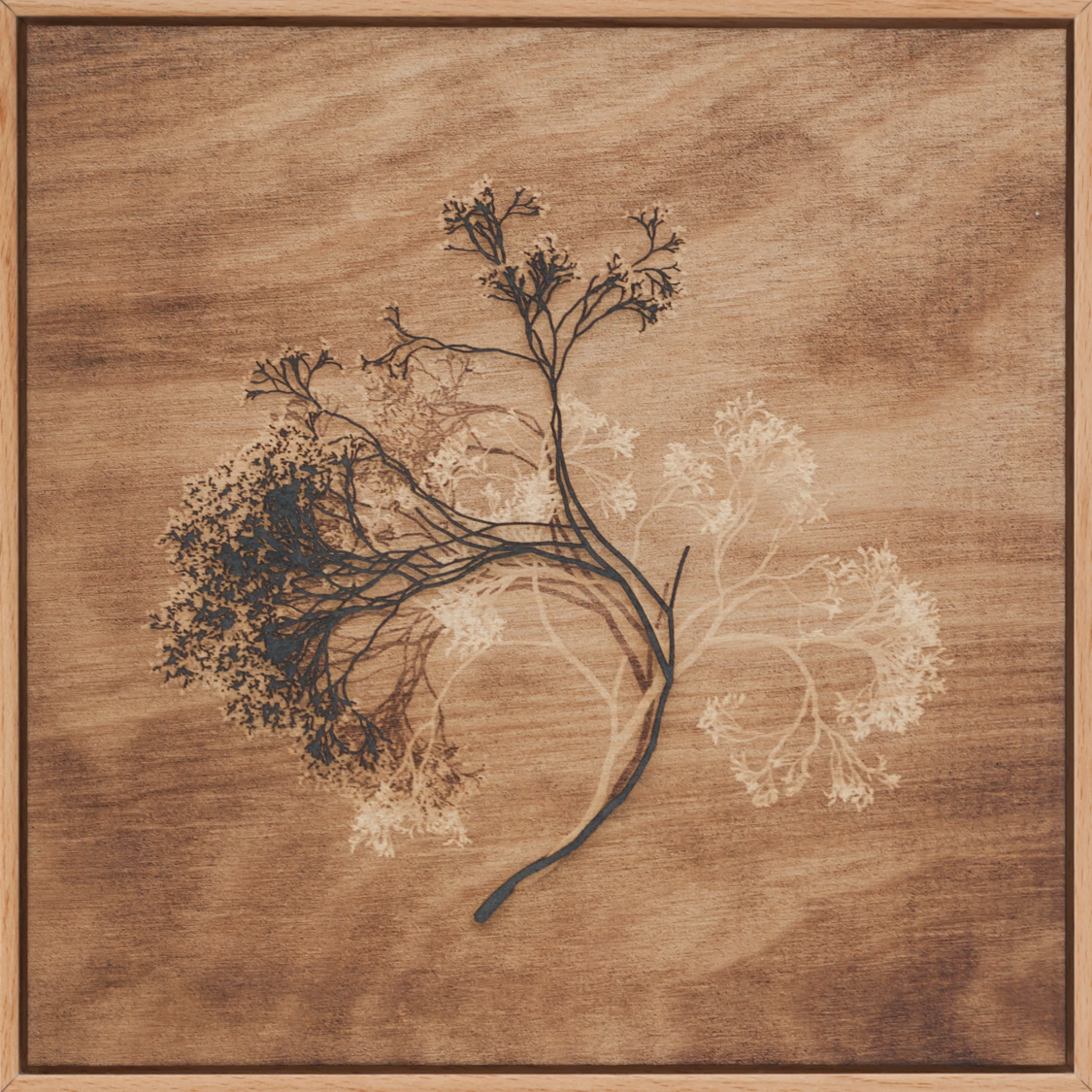
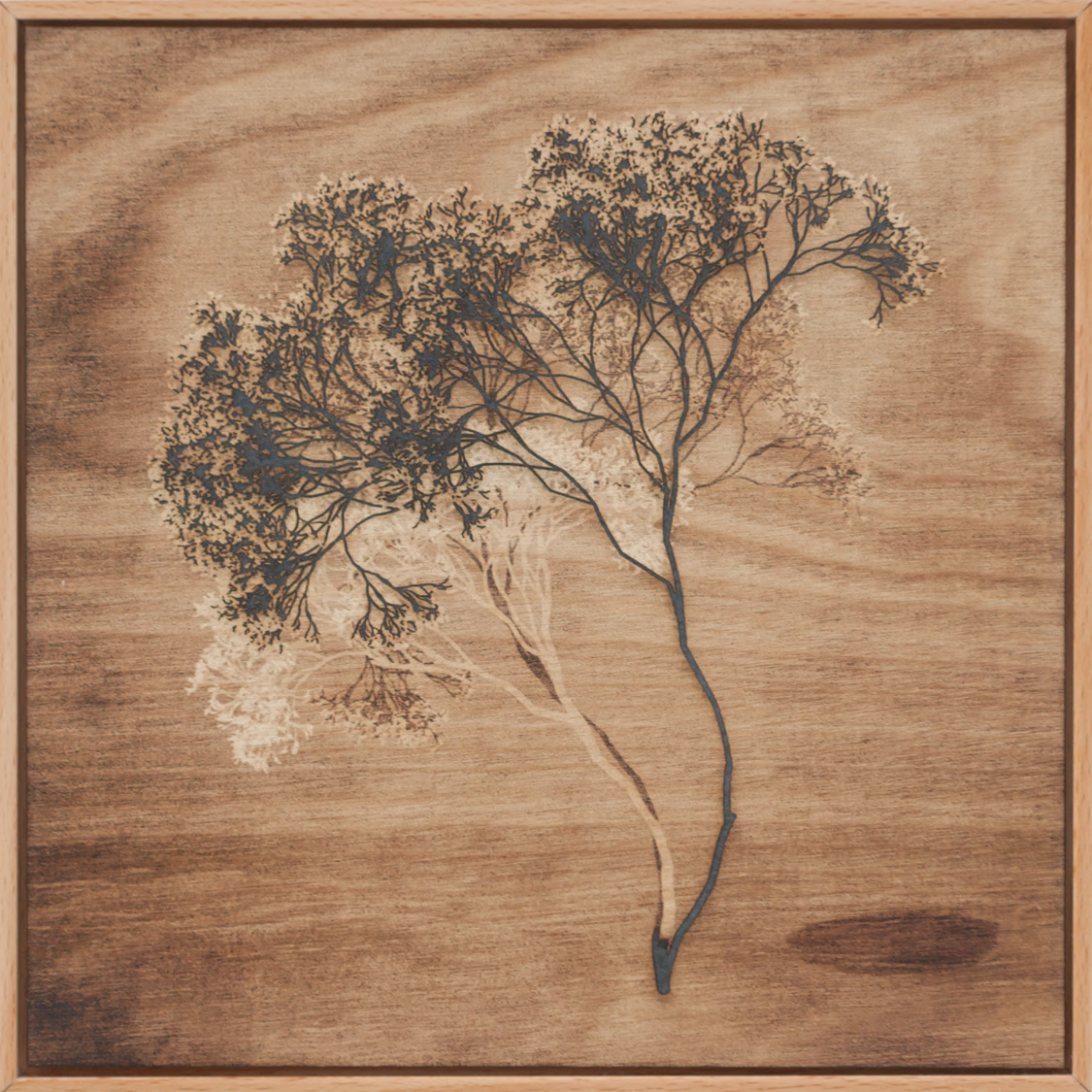
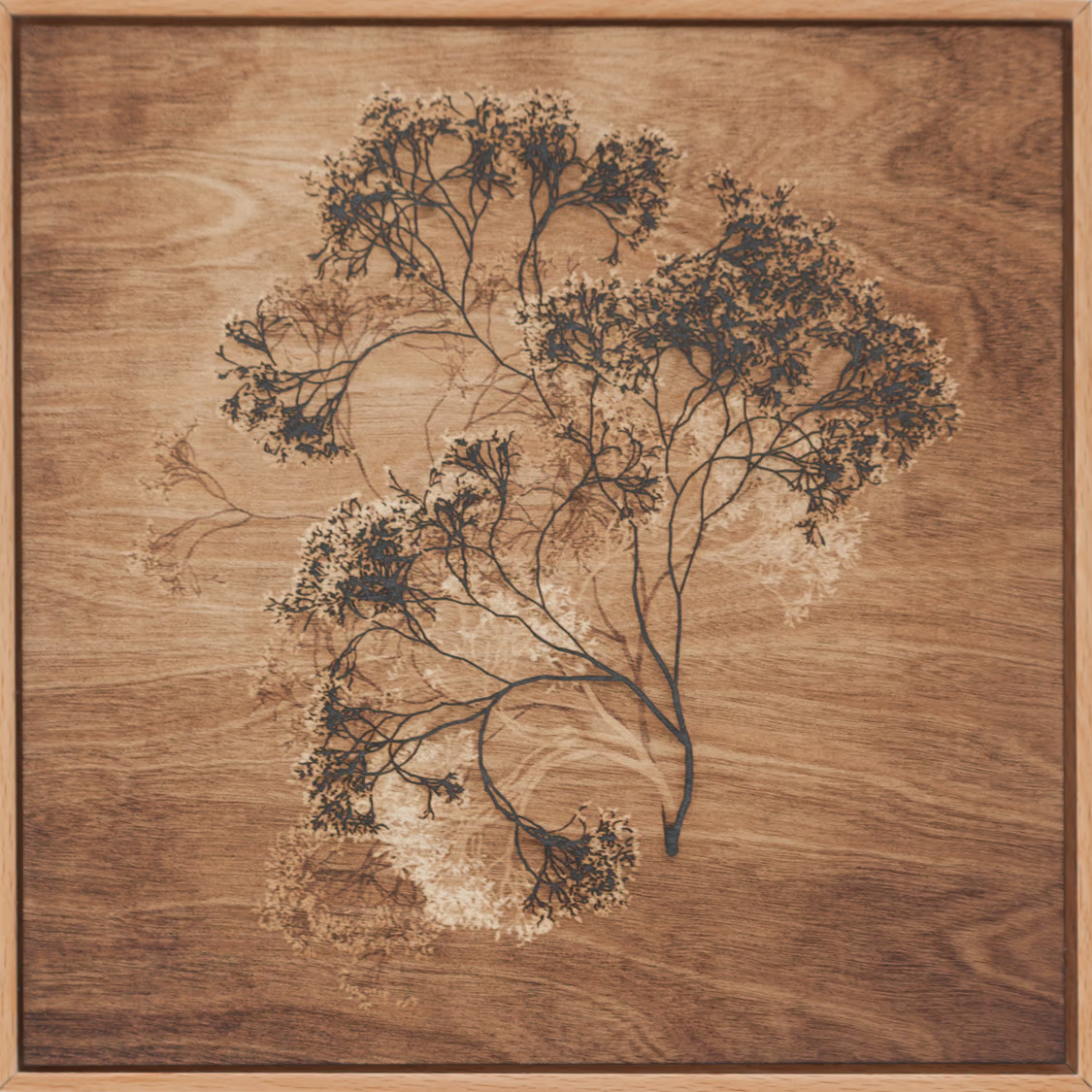
Across these projects, attention shifts from isolated events to continuous processes. Buildings exchange energy with their surroundings, spaces are transited, climates fluctuate, whether or not anyone is paying attention. The works function as slow sensors, making these ongoing dynamics perceptible without translating them into numerical language.
Strata turns toward the gallery itself as a temporal body. The building and its environment are read as a single system unfolding over time. Each layer of the sculpture corresponds to a specific moment within a 24-hour cycle, shaped by the dialogue between its anatomy and the surrounding conditions. Stacked together, the slices form a volume defined not by design but by gradual fluctuation, a three-dimensional timeline shaped by forces that exceed human scale.
Strata
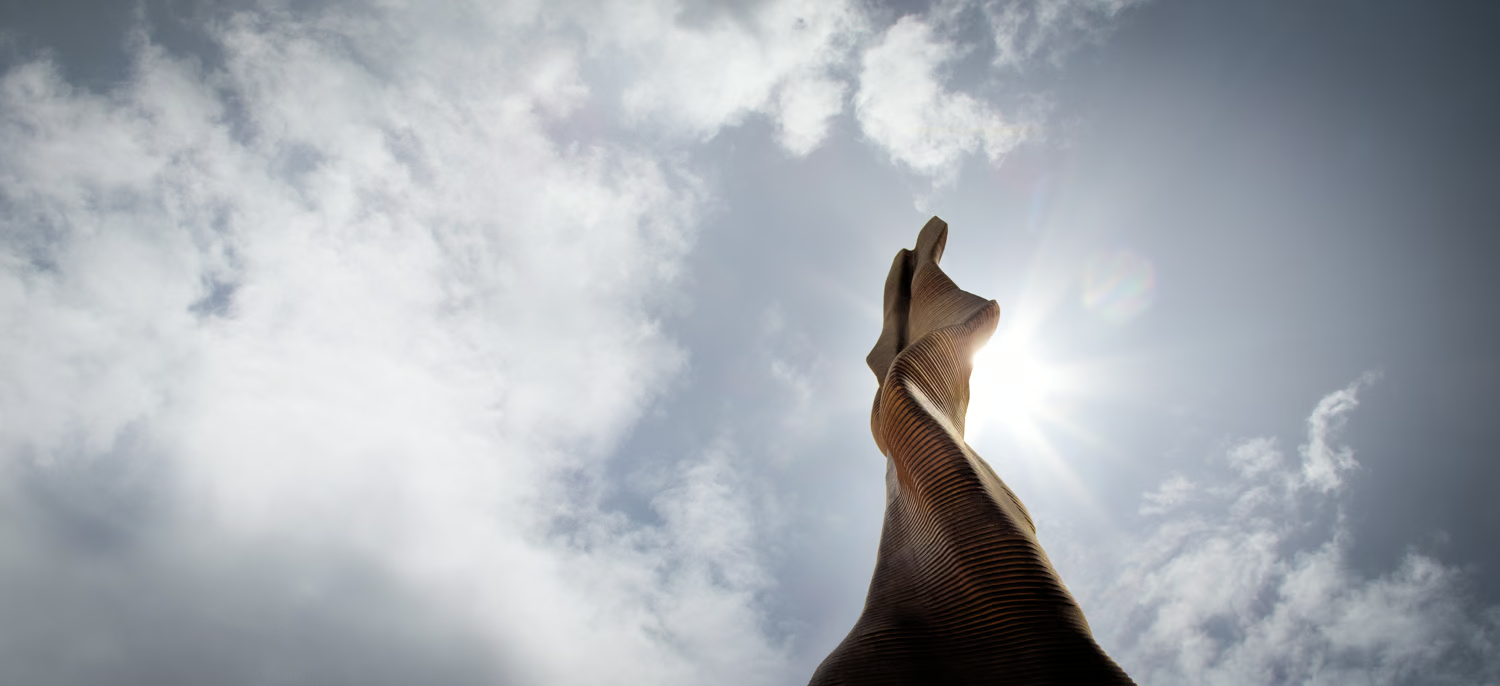
By withdrawing from instantaneous digital representation and allowing processes to unfold slowly in physical form, these works establish a bridge between analysis and sensation. Data loses its association with control and prediction, becoming instead a means of awareness. What emerges is not an answer but a condition: a way of perceiving the world as a network of continuous, often invisible transformations.
Analytical information gains weight, duration, and presence. It stops being abstract and begins to behave like matter.
There is more to explore
Each portfolio offer unique perspectives on how ideas evolve and connect over time.