Don’t take this strictly as a chronological order, interests evolve over time, but once a new line of work opens it runs in parallel. I will come back to it eventually, and new projects might touch different aspects across several of them, eventually opening up its own line of work. The portfolio highlights a few projects through an ongoing conversation between what surrounds me, and how I react to it with the tools I have at the time.
Looking back, the underlying line of questions has remained consistent, even as the tools shifted from analog darkrooms to code, electronics, or mechanical elements. What changes over time is not the what, but the how. The conversation remains the same, but with more vocabulary: moving from early experiments with perception to physical interferences in space, and ultimately to objects that hold a record of time itself.
Constructed perception
I learned to make images with my hands before I learned to make them with code. Rolls of film cut and loaded by hand, paper exposed against light and time. Some of my earliest work comes from that gap between analog and digital, back when the gap was still worth defying. The image stopped being an object you would look at and became a structure you could enter differently each time, not fully random, but not fully fixed either. They planted the seed to start thinking about systems beyond the image itself.
Der Unbekannte Einwanderer
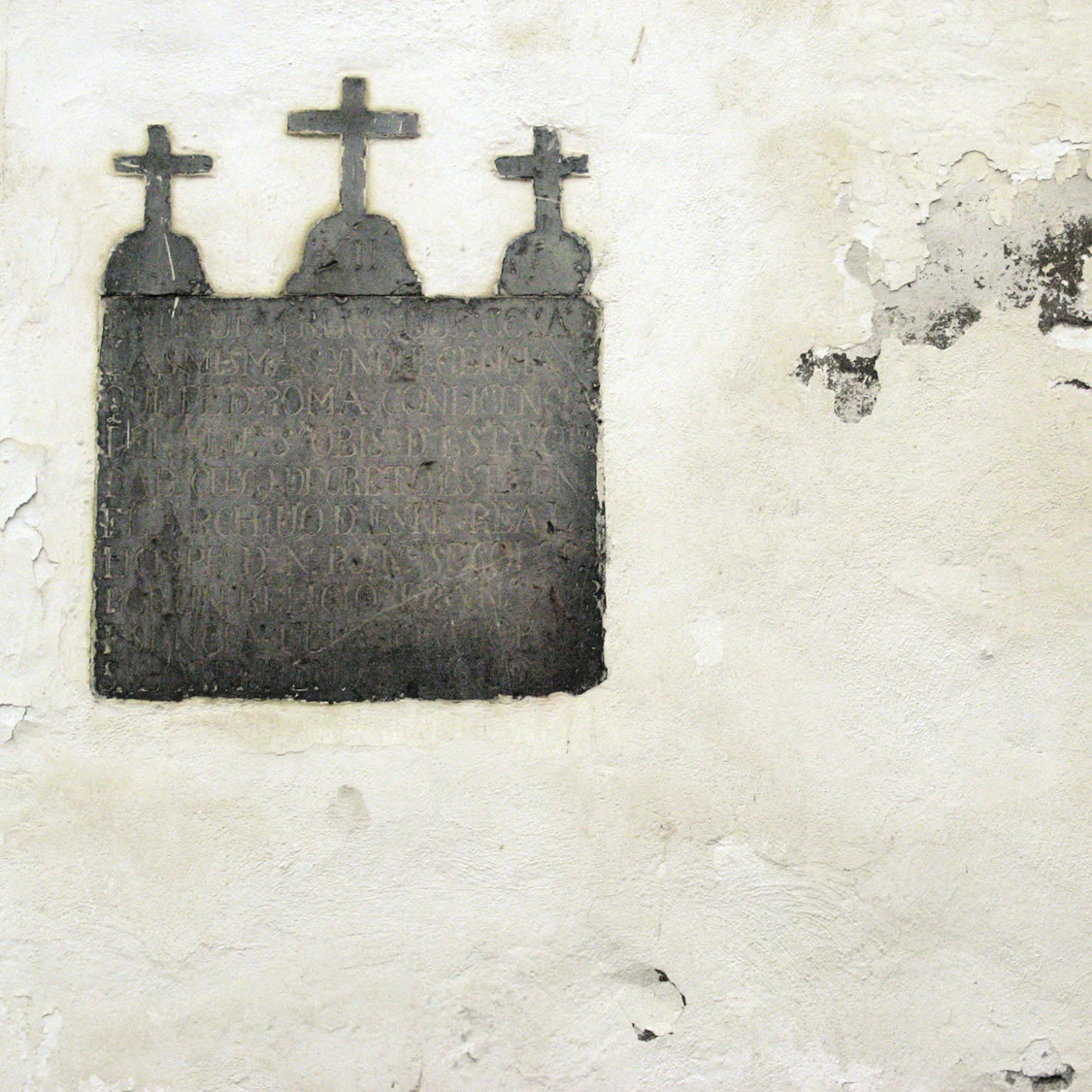
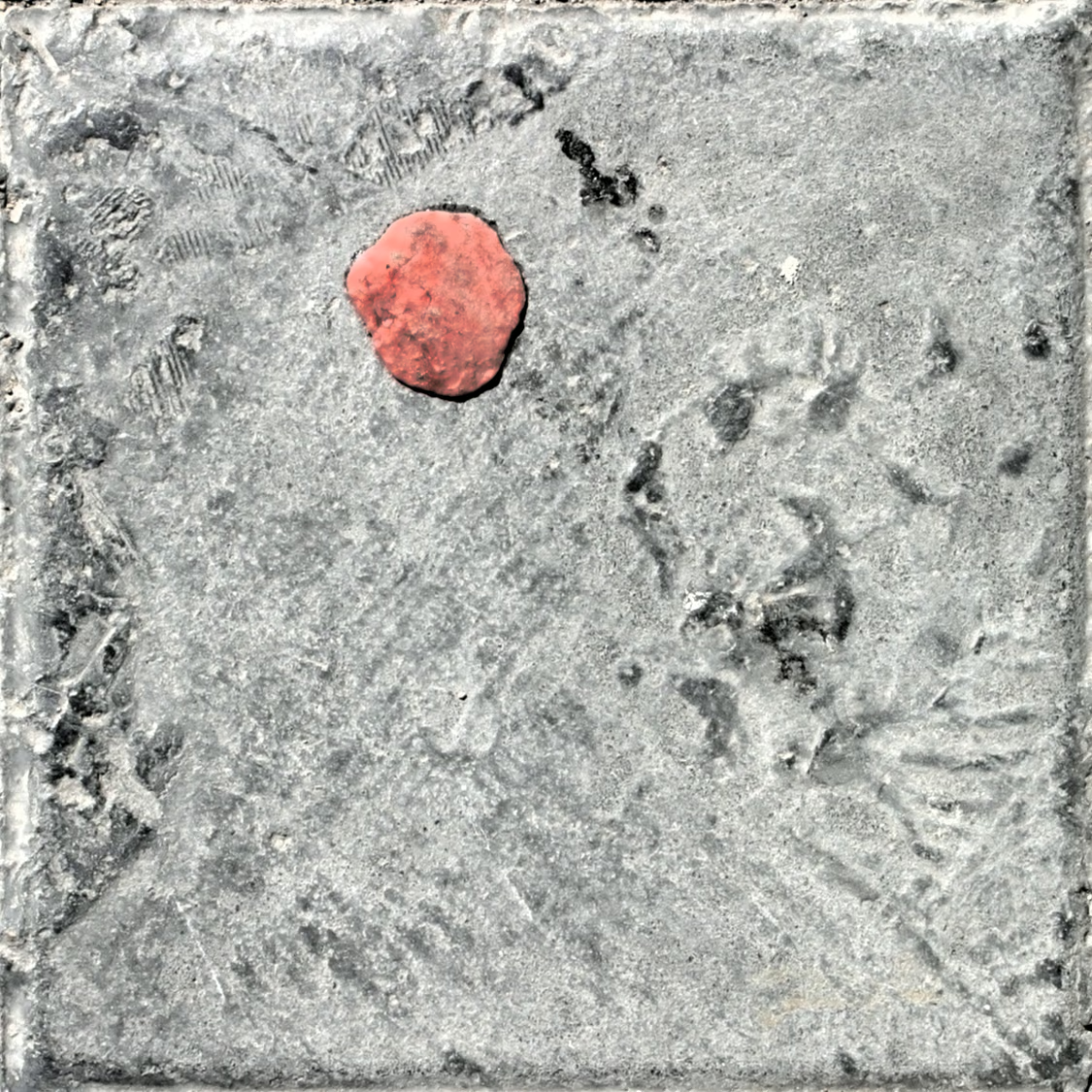
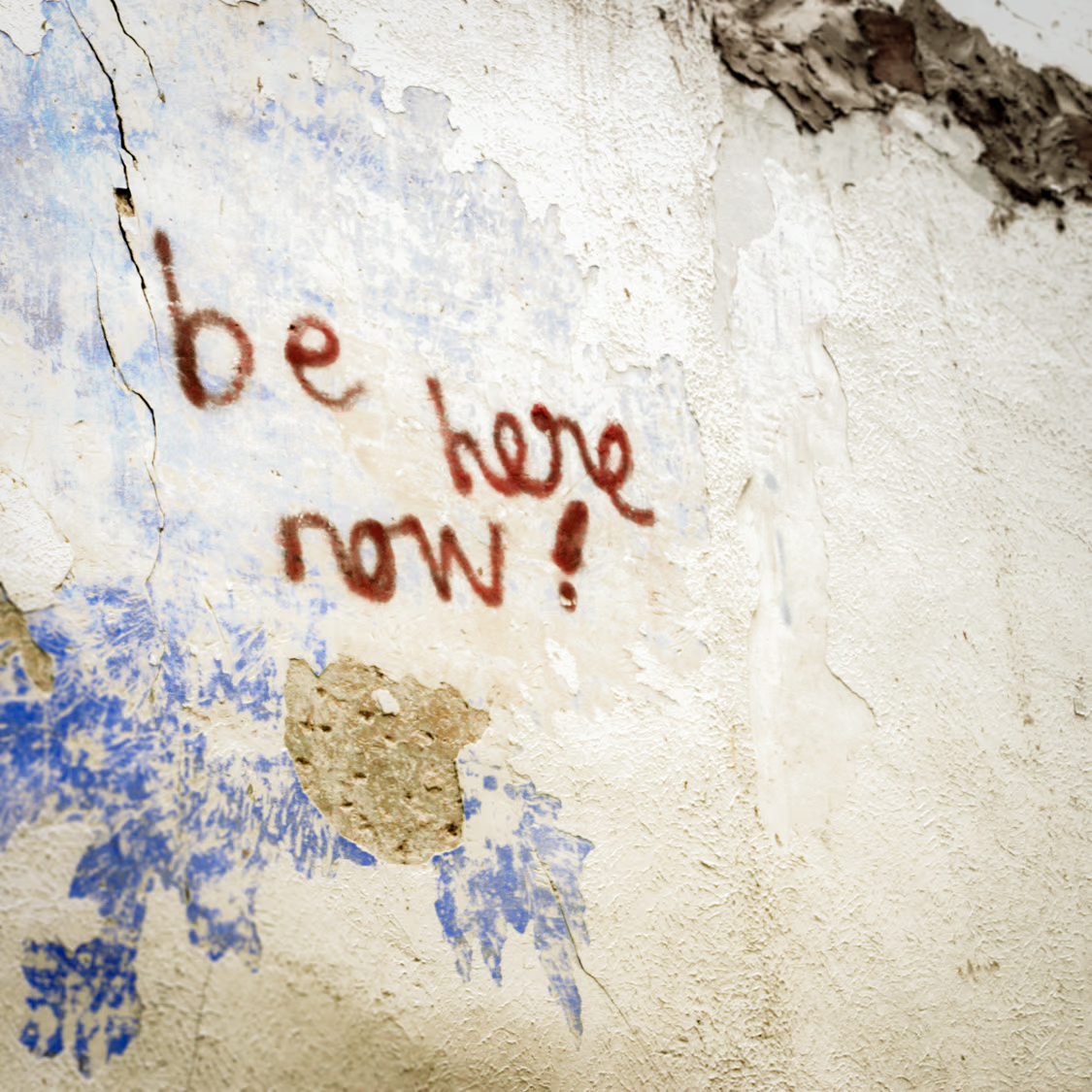
Der Unbekannte Einwanderer came out of that shift, during a stay in Germany. Fragments of a city, projected without a fixed sequence: footsteps, textures, graffiti, things that sit at the edge of attention until someone points them out. No one sees the same version twice, because there isn’t one to see. There is visual poetry to it, but I can now see it as the first dataset I captured; data reorganized on the fly and sent back to the screen with a different meaning.
Intrusiones
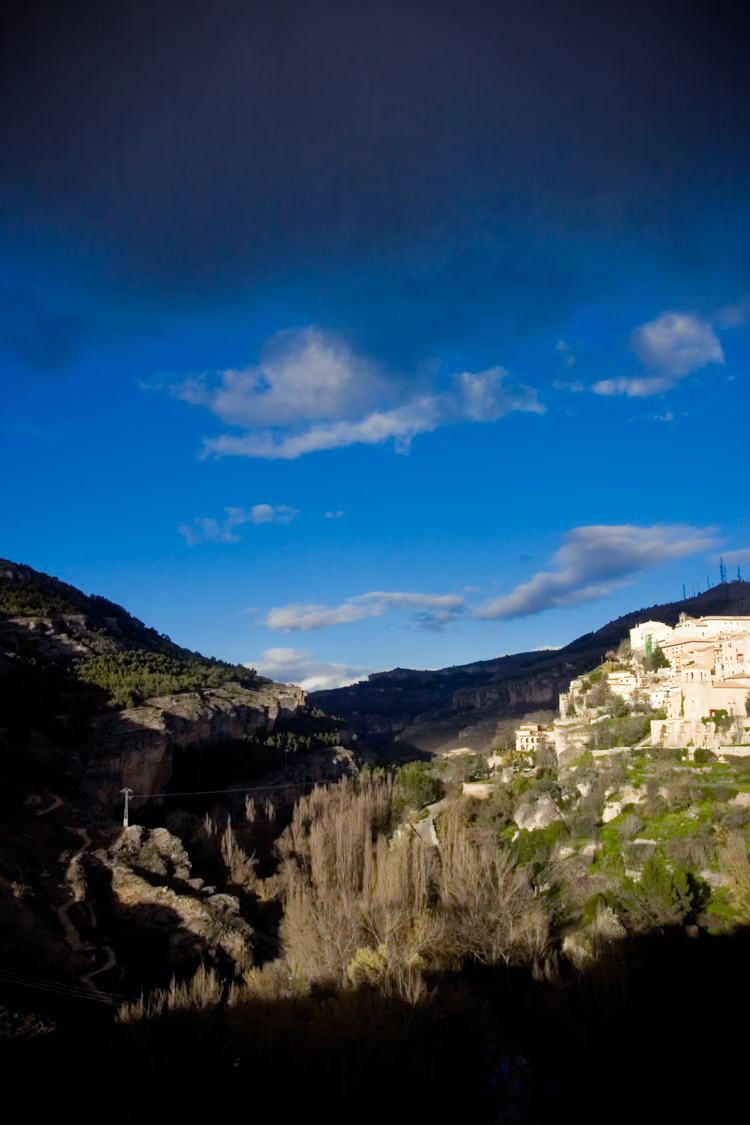
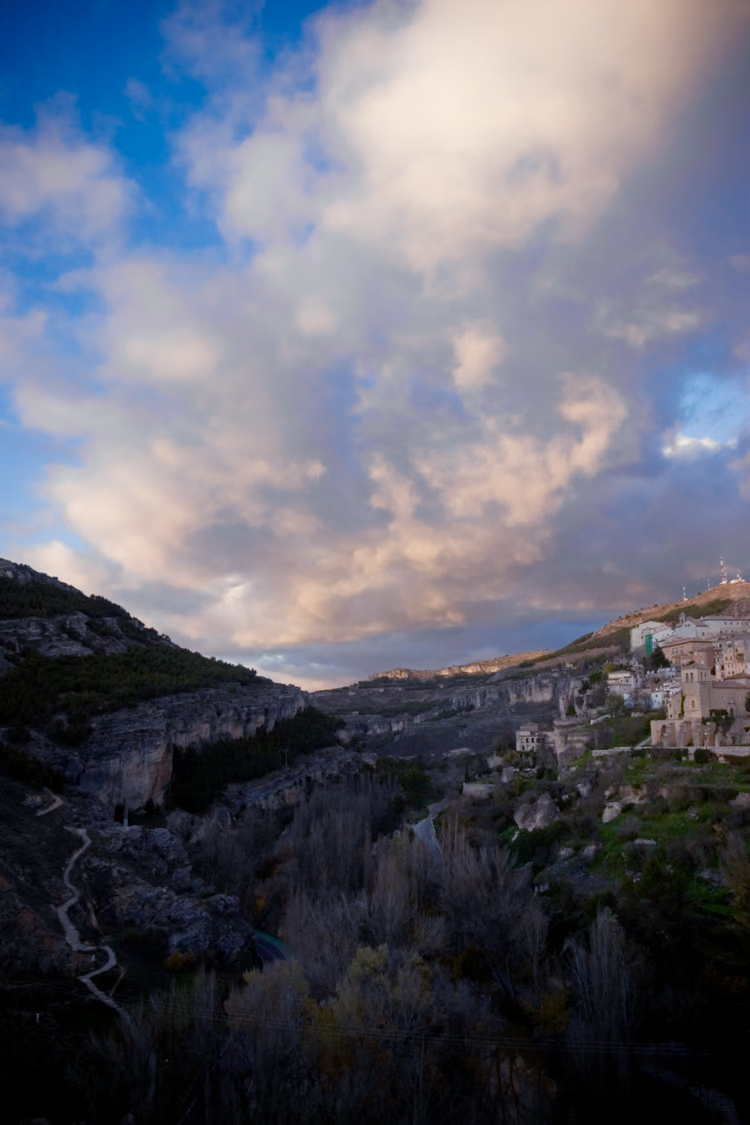
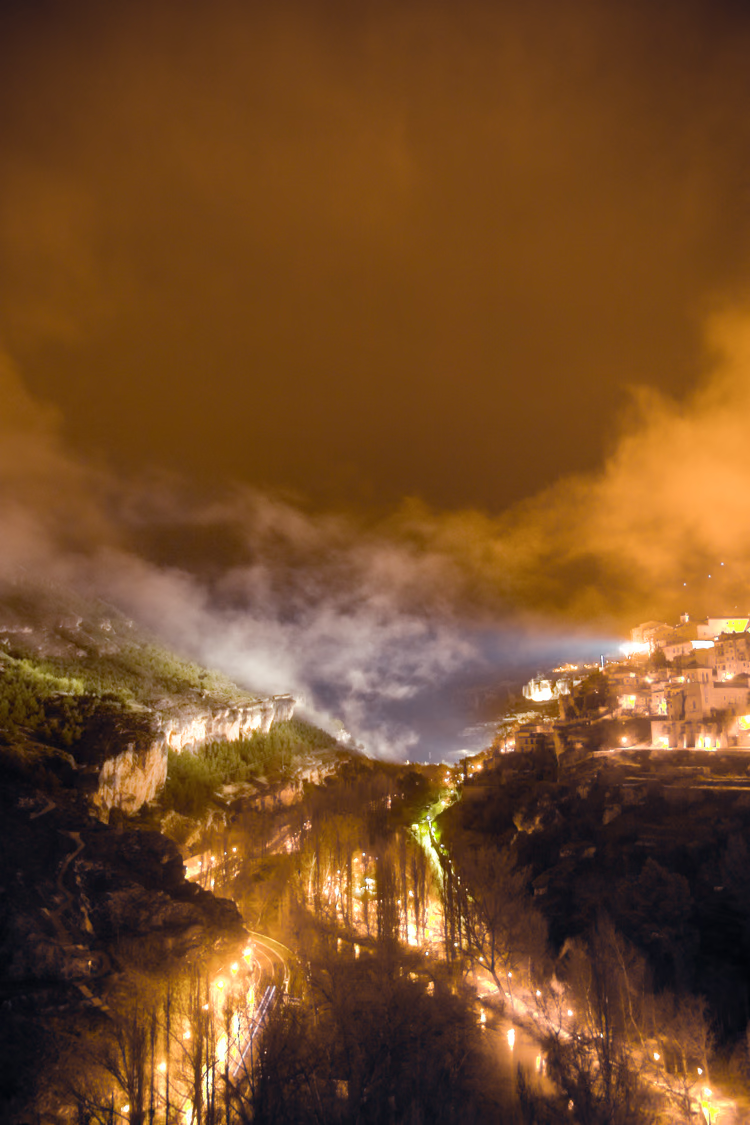
Intrusiones came from somewhere more private. An attic, a terrace, a wall of glass doing exactly what glass does: window by day, mirror by night. Pulling apart a laptop, wiring the screen into a wooden frame, and hanging it on the wall like a digital window was still a small act of rebellion back then. Sound never plays in the piece. It’s written instead, notes accumulating over the landscape until neither the view outside nor the reflection inside stays legible. Just the record of what got in. Although technically the work is a video, giving it a physical shape and writing the sound instead of playing it crossed the barrier from image to object, demanding its own space.
N
N belongs conceptually to this same line of thought, but was made a decade later. It holds that early instinct of using images as a tool to reveal the systems beyond the surface, but shows different ideas too, pulling more toward object design than interaction with space. Machines and machinists photographed through repetition and wear, texture as a record of what actually happened rather than what a dataset says happened. It carries the same DNA as later data visualization works, but expressed through print and mark-making.
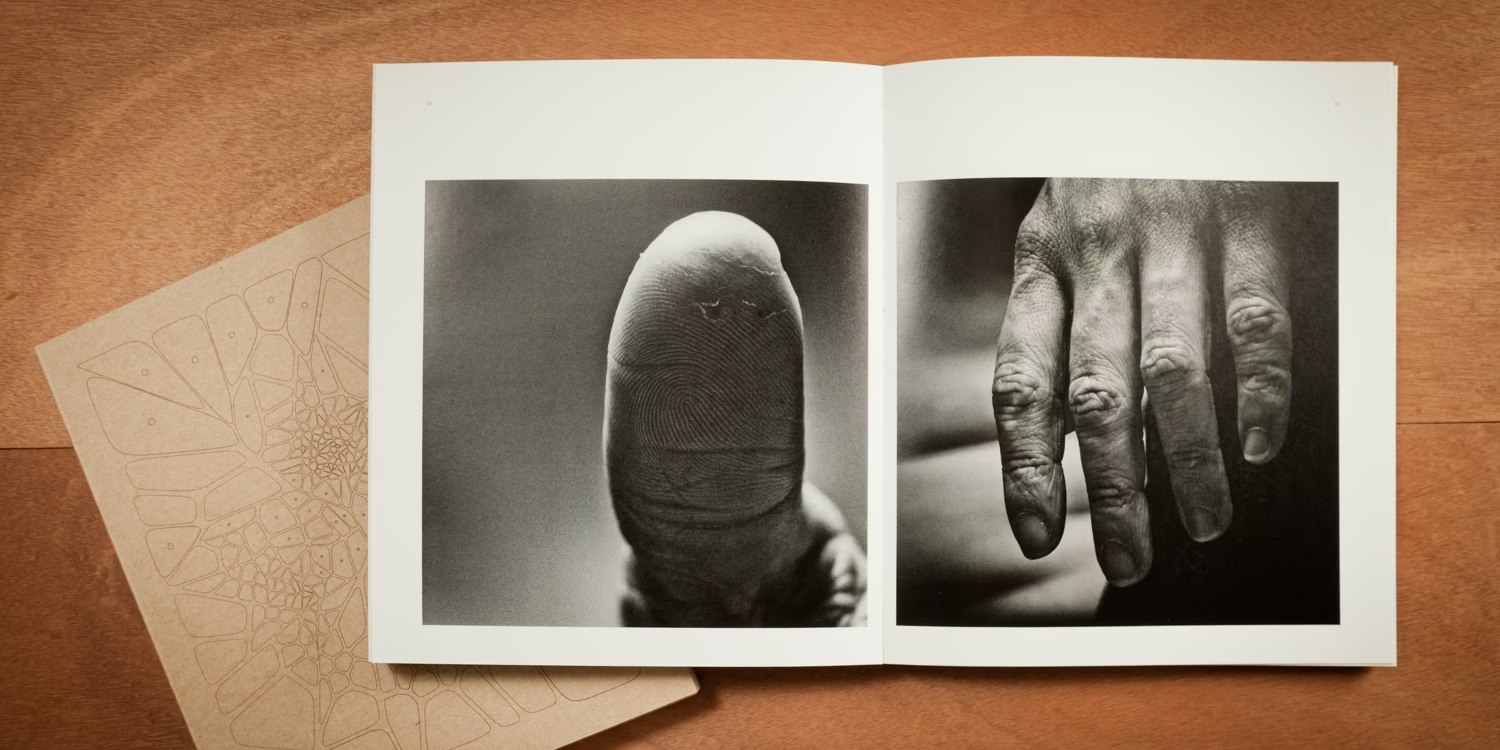
That focus on the physical weight of the printed surface, the experimental format, the container itself as a continuation of the story being told through the images… that’s probably where photography goes next for me, that and whatever the Heidelberg and my patience let me get away with.
Unstable equilibrium
Following the path Intrusiones opened, the work moved off the wall and into the room, expanding into physical space. Interaction was never meant to be a smooth interface or a playful device, but a form of disruption.
I remember a show that needed limited entry, some distance, a bit of quiet to take it in properly. It got none of that. Within thirty minutes people had climbed over everything like it was a playground, one piece gave way, and the gallery had to close for repairs mid-opening. That’s roughly when I stopped thinking of interaction as something I could design, and started thinking of it as something I could only provoke, then watch.
Waves
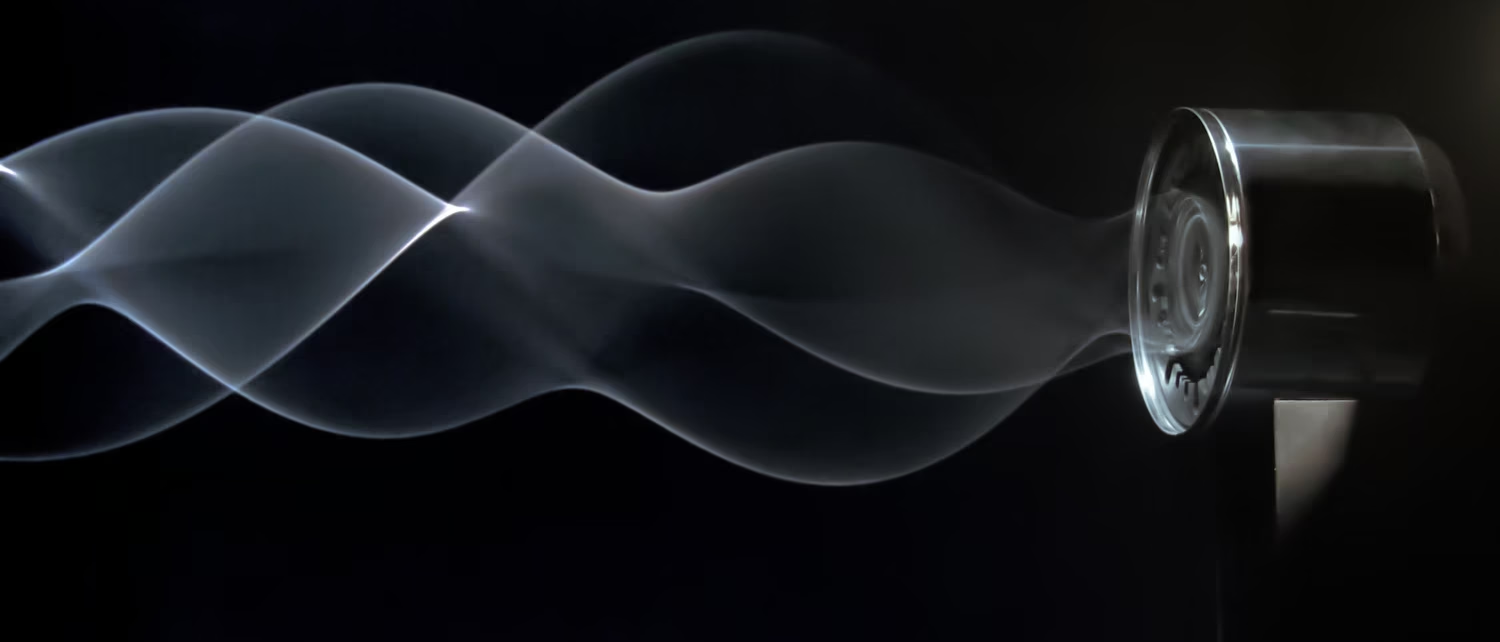
Waves is the clearest version of that idea. A rope spinning fast enough to trace a shape in the air, no buttons, no interface. People don’t activate it, they disturb it with their presence, the way a body disturbs still water just by entering it, shifting the space from calm into turbulence. It took the preconceptions I had about sculpture and expanded them through the lens of the programming and electronics I’d developed earlier for image-based projects.
Outcomes
Outcomes spreads and amplifies the same concept across an entire room. Vertical tubes reading presence like a field of theremins, each one communicating with its neighbors to create a shared symphony, so a single person walking through never triggers quite the same sequence twice. Nobody composes it. Nobody conducts it. It negotiates the space with you. This took the idea of systems to a new scale, building a network of elements that generated behavior nobody programmed directly.
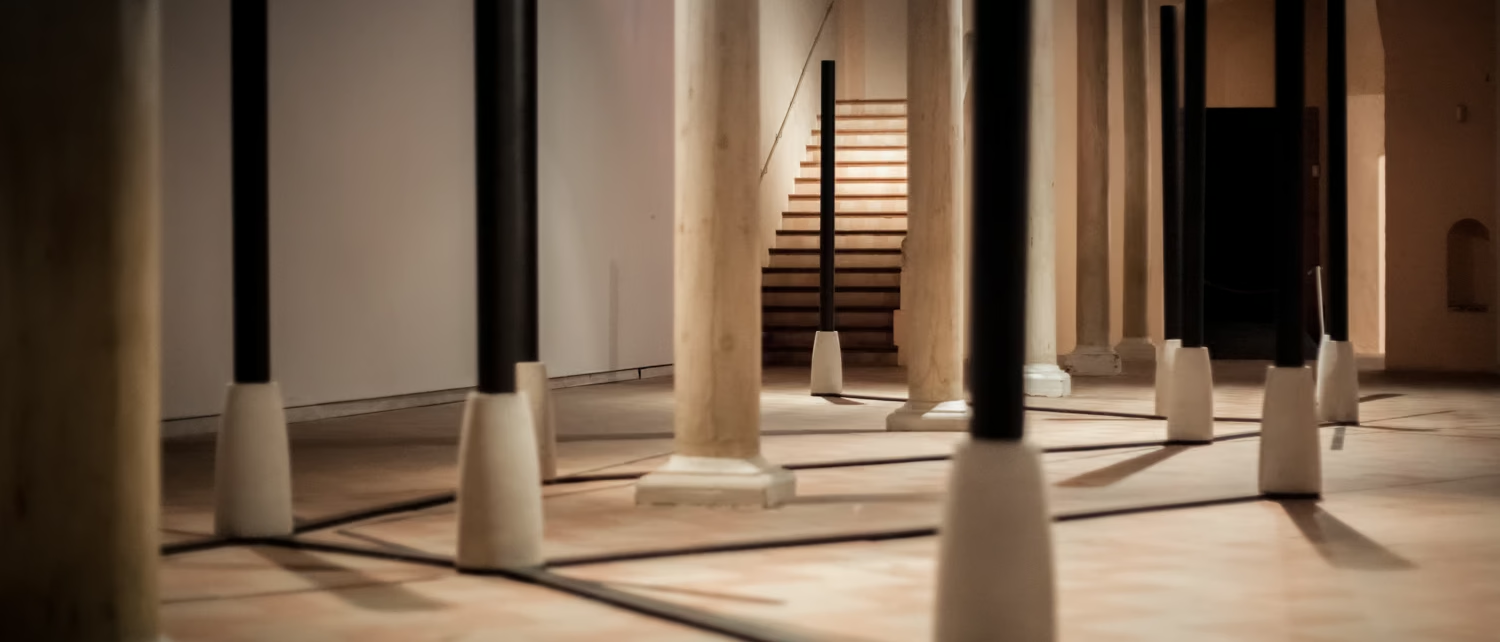
There was a stretch of years, before video tracking and augmented reality made interaction mostly a software problem, when physical presence alone could throw a whole room off balance. I still think that was the most interesting part. It’s a very particular kind of tension that remains at the core of the spatial work for me.
Time made visible
Growing up in the south of Spain, the year had two seasons: summer and winter. Spring and autumn were just an odd weekend. Moving to Germany felt like the first time I lived through a proper change of seasons: cold in the morning, harsh sun by noon, wind that changed the whole mood of a street by evening. Nothing about the place had changed, everything about being in it had, and I felt particularly attracted to that experience. That gap, between a place that stays measurably the same and a place that never feels the same twice, is where these ideas come from.
Whatever happened, Happened
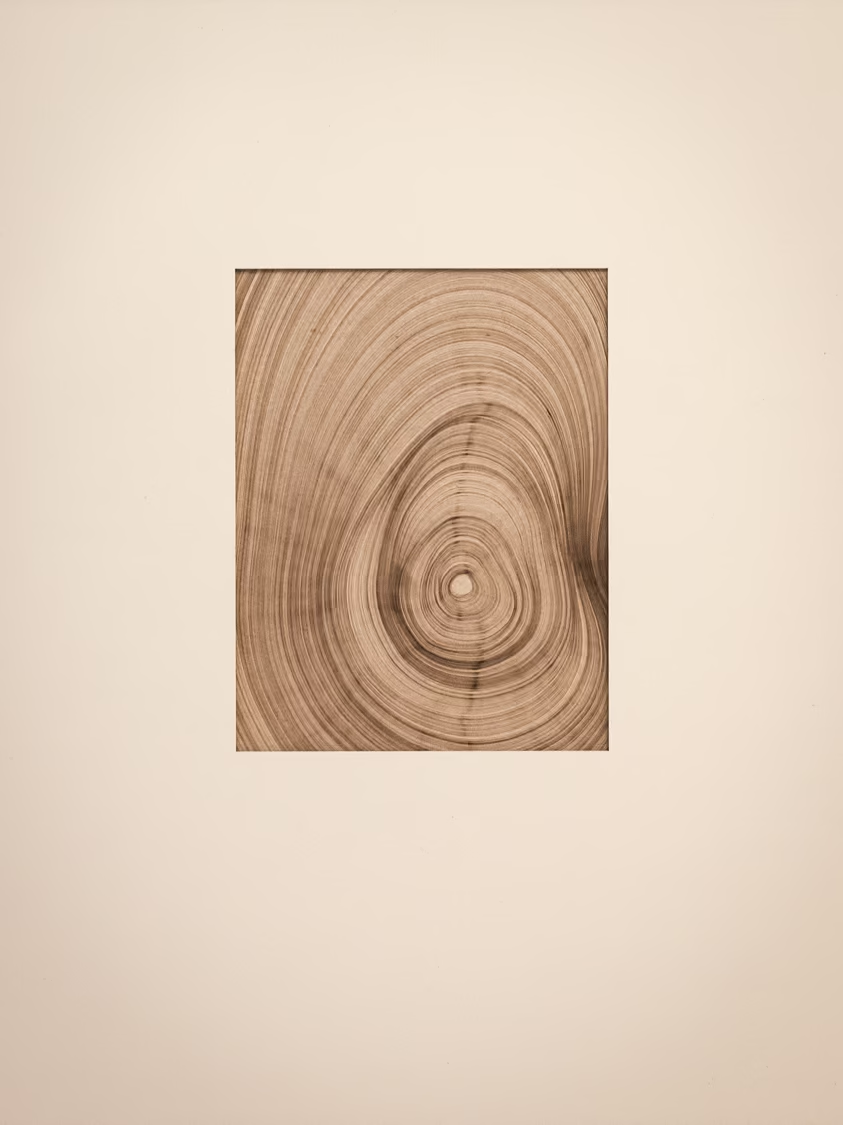
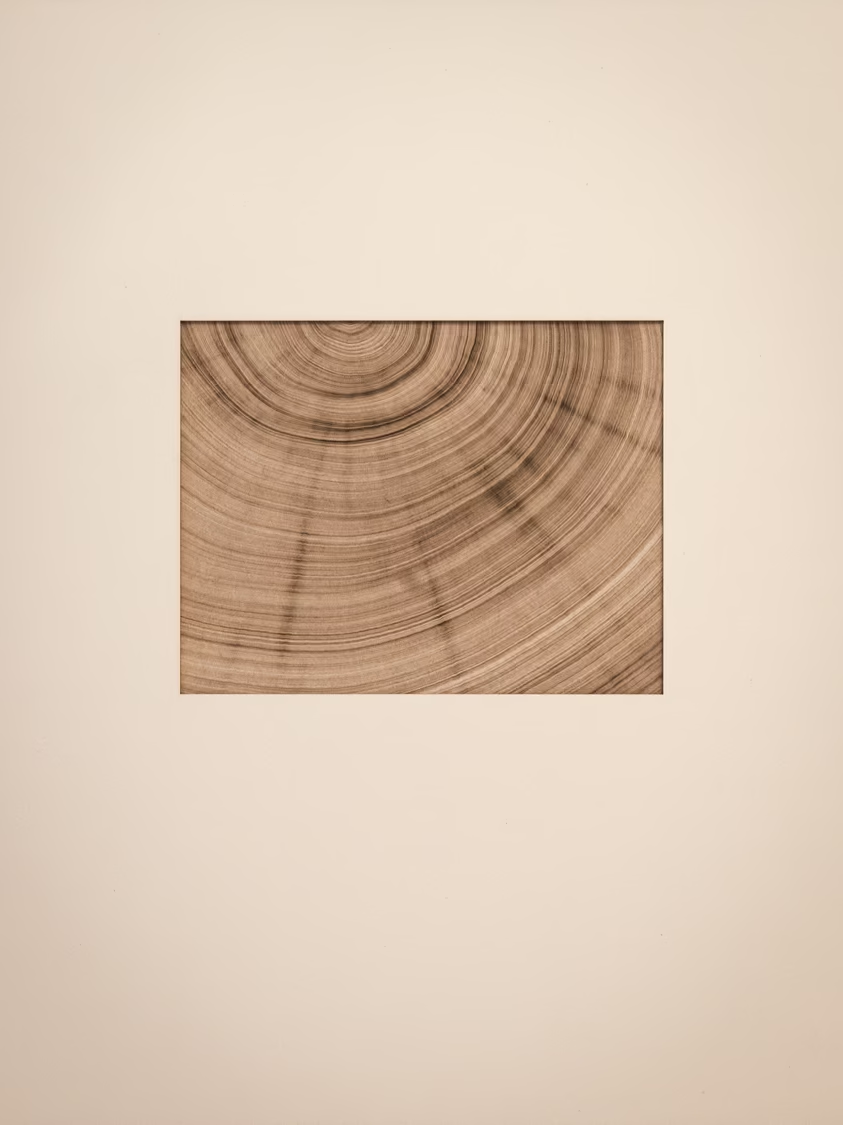
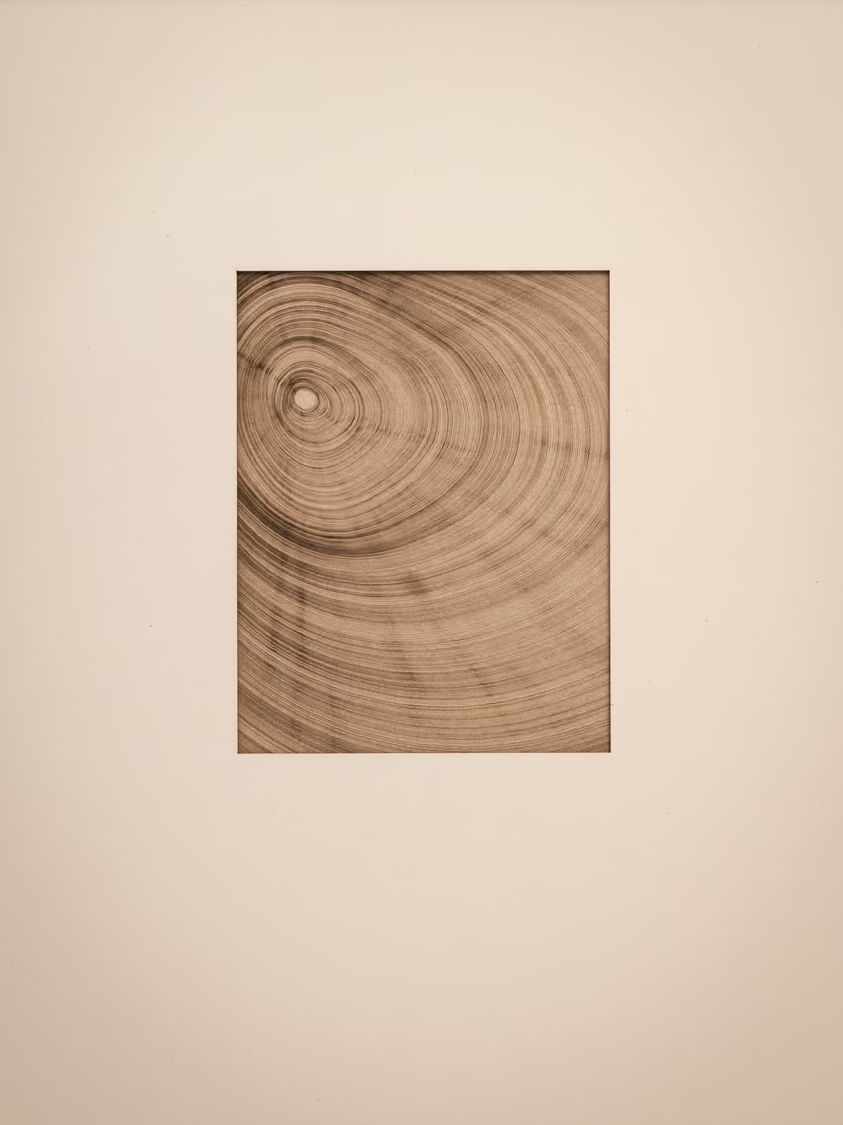
Whatever Happened, Happened bridges between previous projects built on real-time reaction and the ones that came after, focused on what’s left once the moment passes. It still tracks a room, presence, who came close and when, but it moved away from live performance to care about the aftermath. A laser, moving so slowly you can barely notice it, engraving concentric rings into wood for the duration of the show, an unalterable physical record of its audience and their presence in time. It marked a transition from reacting to recording, opening the path for data as a physical material.
Receptive Environments
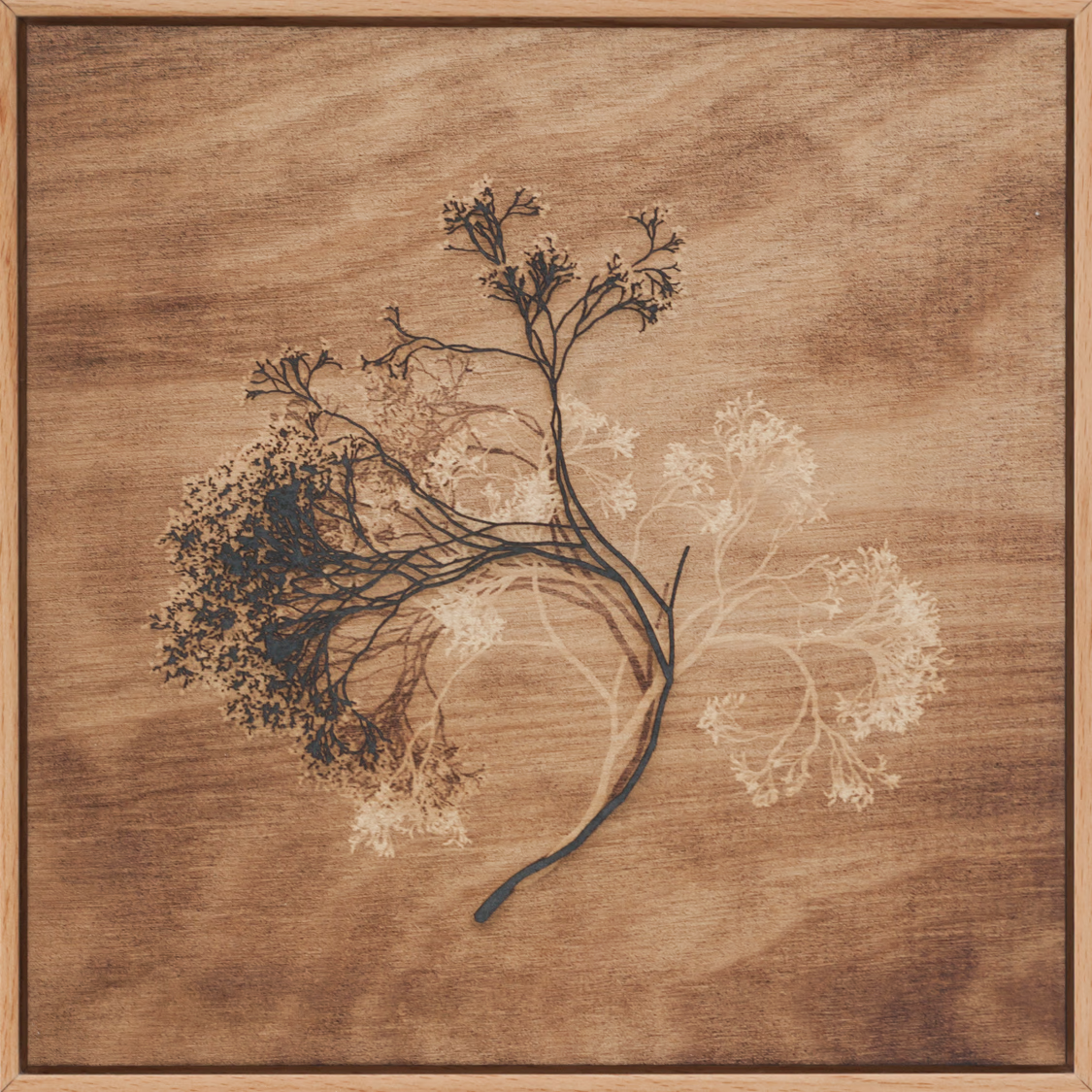
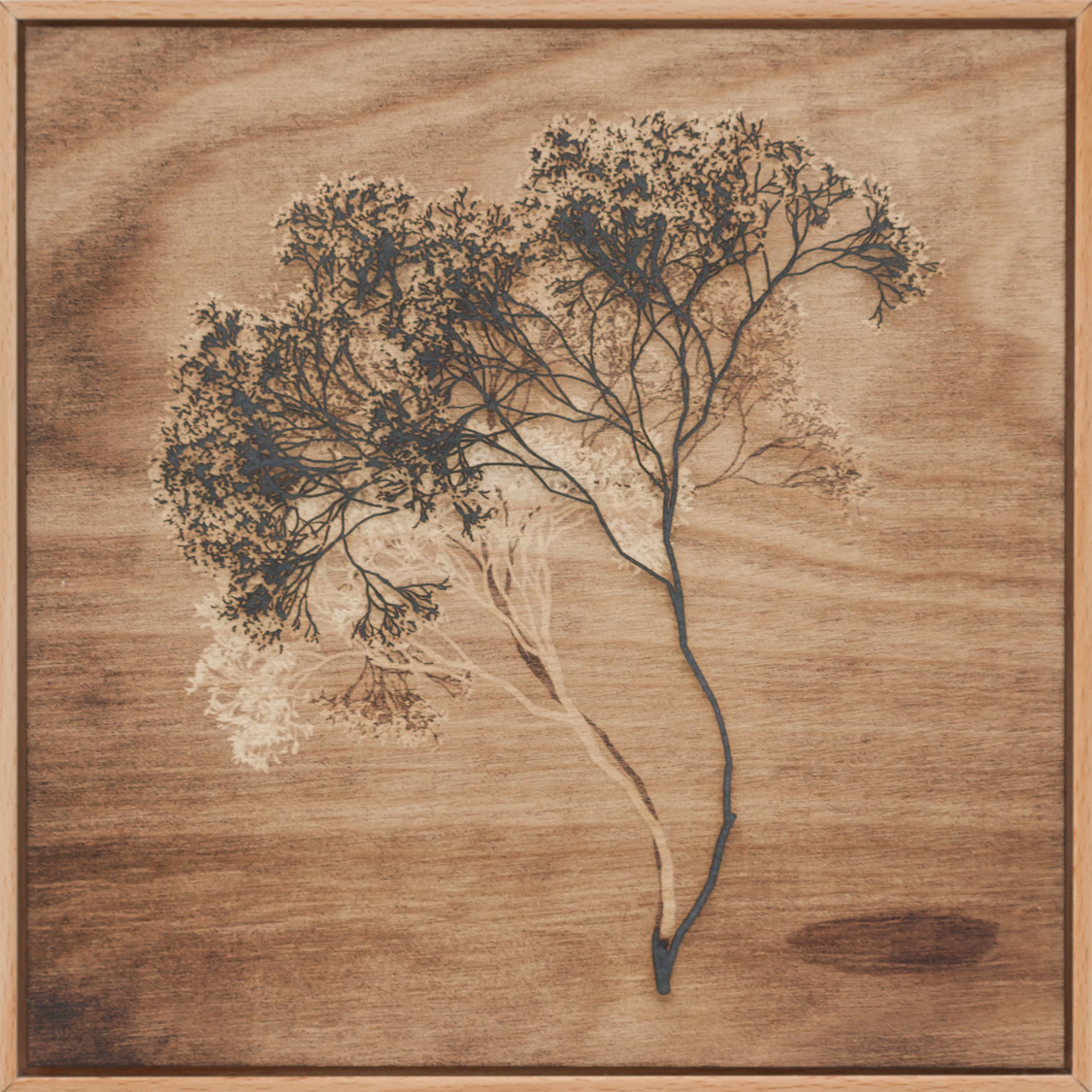
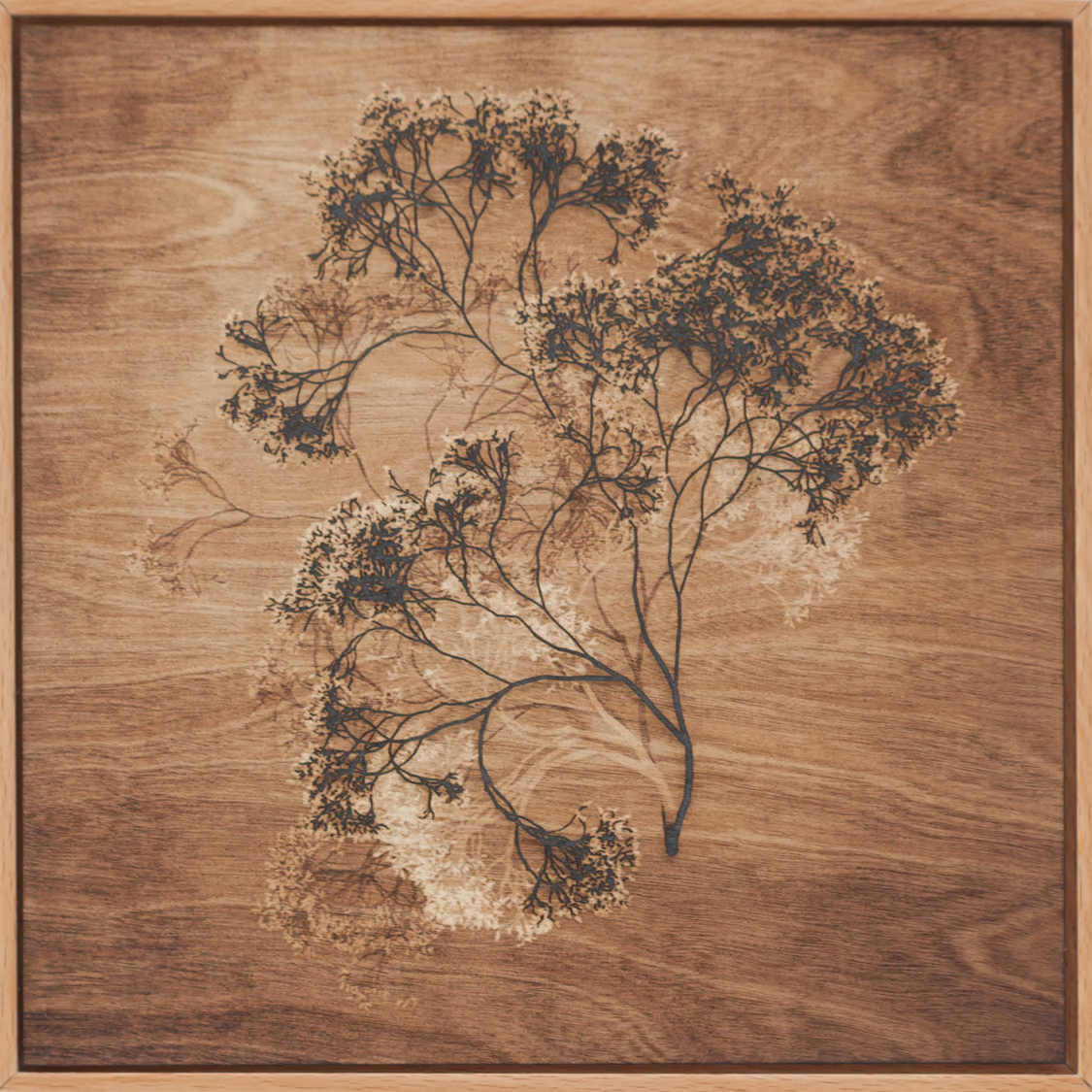
Receptive Environments takes the audience out of the equation entirely and looks outward. Temperature, humidity, and light recorded outside the gallery are translated into one engraved form a day, accumulating before the show even opens. What grows from that isn’t a chart you could read back into numbers, it’s closer to a pressed leaf; it carries the weather without explaining it. I came full circle, back to making images, but with a new understanding. It’s around this time that I also made N.
Strata
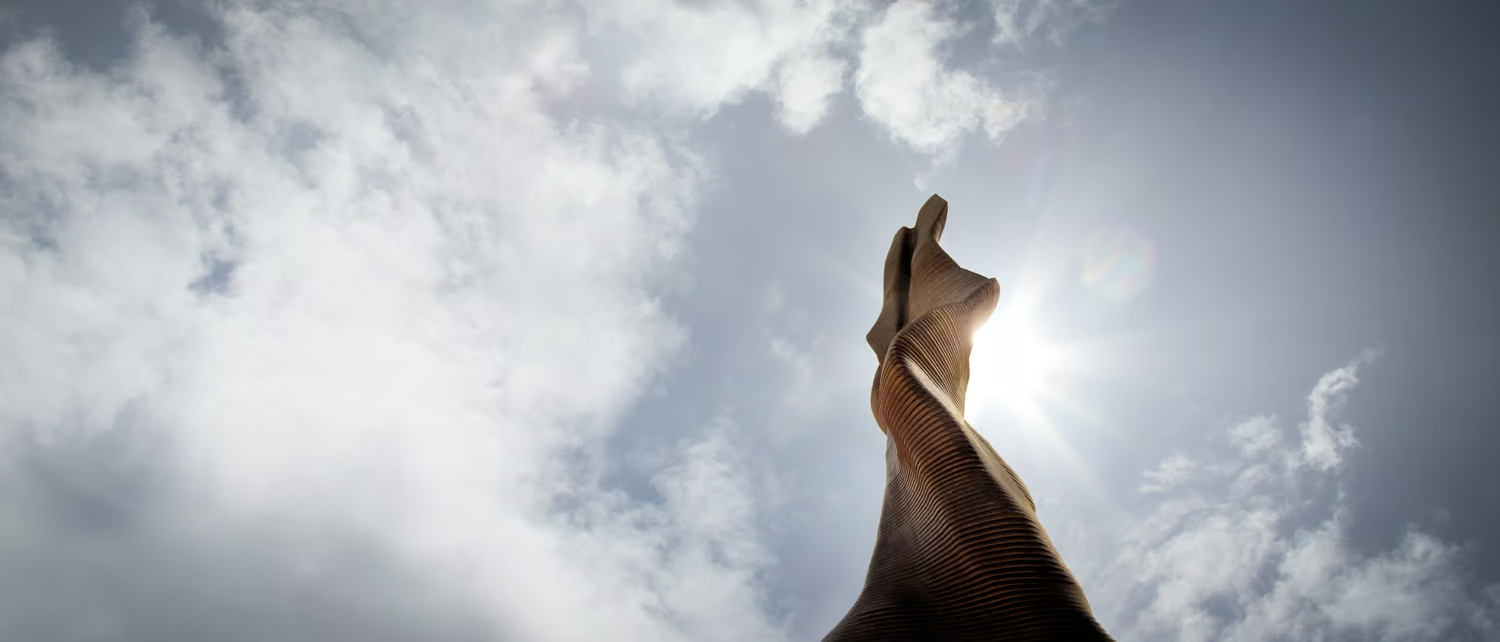
Strata expanded the same concept into a volume. A building’s exchange with its surroundings is read as hundreds of layers stacked into a three-dimensional timeline. It pushed hardest into what an automated system could generate on its own, while simultaneously demanding tactile, material decisions that no dataset could make. In a way it took me back to sculpture, but beyond the systems or the data, it made me want to shape the object by hand, to model and design.
Interfacing the world
Looking across these projects, there is a trajectory that moves away from purely digital or algorithmic systems toward tangible, lasting form. Less system, more object. Whether through experimental printmaking, spatial structures, or collectible design, the work continues to lean into weight, texture, and the permanent trace of invisible forces and everyday interactions.
That is what I am building towards.
There is always more
Projects that have a reason to be, but not enough weight to make into the portfolio yet, or ever.
The Cross Section is where you can see new work take shape. The Archive is where some of the odd ones go to marinate.